Tengah Garden Residences (2026) | The Complete Review
Project: Tengah Garden Residences District: 24 (West Region) Tenure: 99-Year Leasehold Date: February 13, 2026
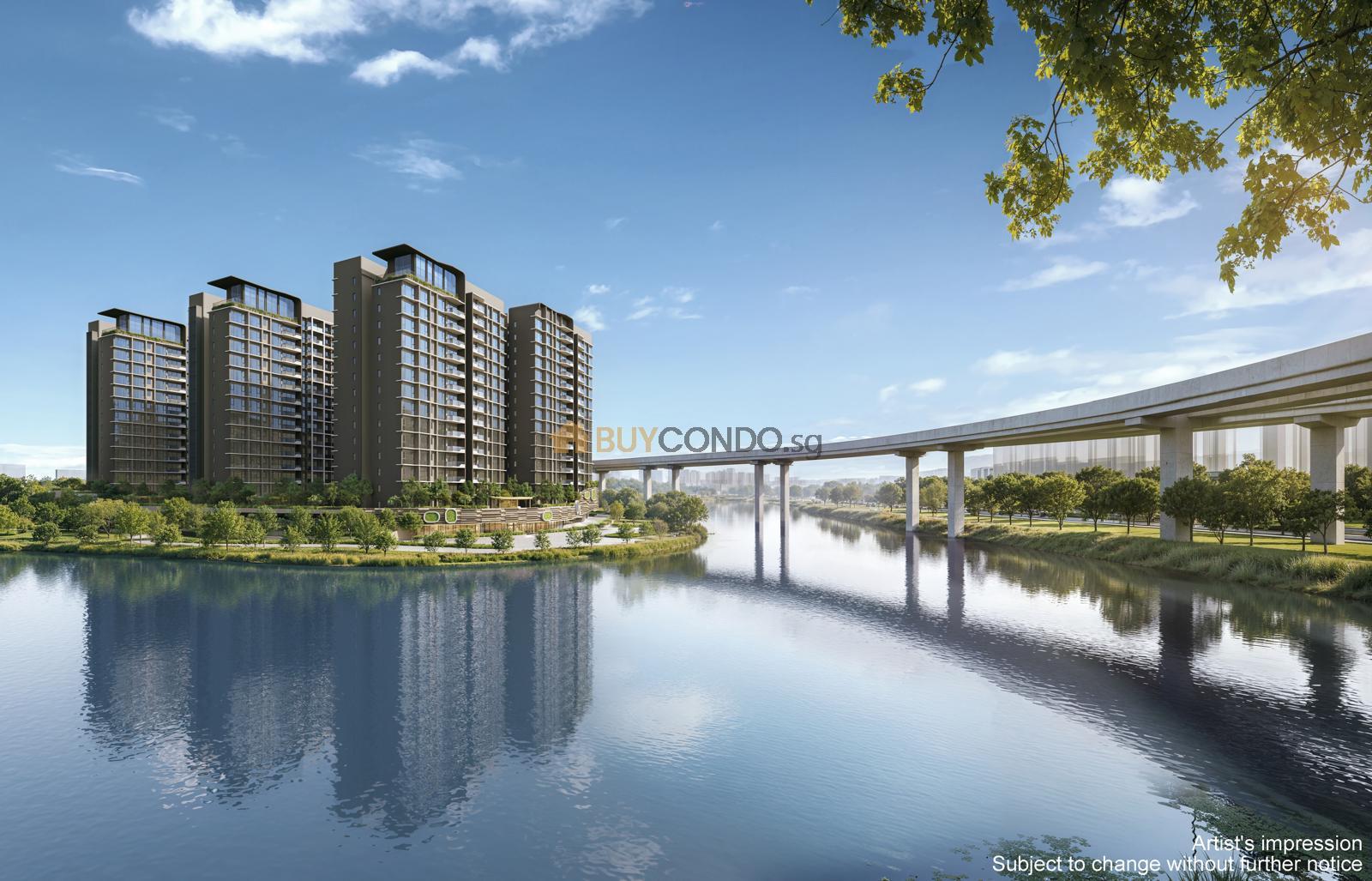
If you have been following the Singapore property market over the last few years, you know that the “West” has been the subject of massive transformation narratives. But nothing has captured the imagination quite like Tengah. Dubbed the “Forest Town,” it has been sold to us as the future of sustainable, smart, and biophilic living in Singapore.
For a long time, Tengah was just a master plan—a vision of car-free centers and endless greenery on paper. But today, with the launch of Tengah Garden Residences, that vision is becoming a tangible reality for private property buyers.
As the very first private condominium to launch in this new township, Tengah Garden Residences occupies a unique and somewhat polarized position in the market. To some, it represents the ultimate “first-mover advantage”—a chance to buy into the ground floor of the next Punggol or Jurong East. To others, it is a venture into “ulu” (remote) territory, requiring a leap of faith regarding infrastructure and maturity.
We will look at the hard facts, the master plan realities, the pricing logic, the layout efficiencies, and the exit strategies to help you decide if this pioneer project is the right home—or investment—for you.
1. Project Overview: The “Triple Threat” Developer Consortium
Before we dive into the location, it is crucial to look at who is building this. In the realm of unproven locations (and let’s be honest, a new town is always unproven territory initially), the reputation of the developer matters immensely. You need assurance that the product will be desirable enough to command value regardless of the estate’s maturity.
Tengah Garden Residences is developed by a heavyweight consortium: Hong Leong Holdings, GuocoLand, and CSC Land Group.
This is arguably one of the strongest selling points of the project.
- GuocoLand is renowned for “transforming” neighborhoods (think Guoco Tower in Tanjong Pagar or Lentor Modern). They are masters of “placemaking” and high-end landscaping.
- Hong Leong brings decades of local expertise and a massive portfolio of mass-market and luxury successes.
- CSC Land adds strong construction capabilities and recent successes in the residential sector.
The Fact Sheet:
- Total Units: 863 Residential Units
- Site Area: Approx. 274,000 sq ft
- Configuration: 1-Bedroom to 4-Bedroom (and potentially 5-Bedroom) layouts across 16-storey blocks.
- Key Feature: Integrated Commercial Podium (Ground floor retail) & Direct MRT Access.
- Expected TOP: Estimated 2030.
The development is not just a condo; it is an integrated mixed-use development. This is a critical distinction. In a new estate where amenities are still being built, having a commercial podium downstairs with a supermarket, childcare, and eateries isn’t a luxury—it’s a necessity.
2. Location Analysis: The “Ulu” Factor vs. The Connectivity Reality
Let’s address the elephant in the room: Is Tengah too far?
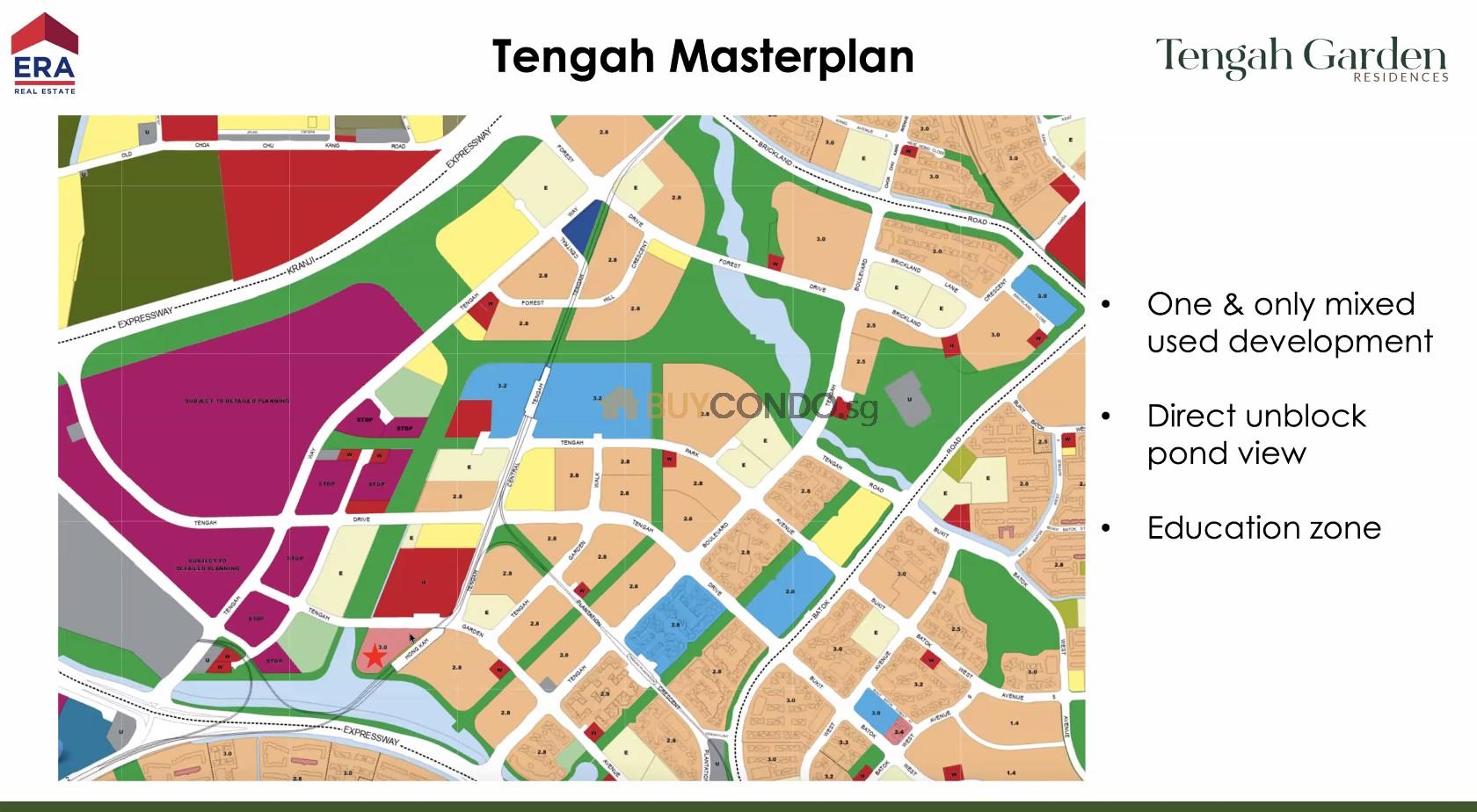
If you look at a map of Singapore from 2015, Tengah was a blank patch of green. Today, it is the bridge connecting the established towns of Choa Chu Kang, Bukit Batok, and Jurong West. However, the success of this location hinges entirely on one acronym: JRL (Jurong Region Line).
The Magic of Hong Kah MRT Station (JS4)
Tengah Garden Residences is situated directly beside the Hong Kah MRT Station. This is not a “5-minute walk” or “sheltered walkway away”; it is practically at your doorstep.
In mature estates, being next to an MRT is a premium. In a new estate like Tengah, it is a lifeline. The JRL, which is scheduled to open in phases from 2027 to 2029, will be fully operational by the time this project hits its Temporary Occupation Permit (TOP) around 2030.
Why does the JRL matter?
- Direct Connection to Jurong East: It’s a short ride to the Jurong East Interchange, which connects you to the East-West Line (green) and North-South Line (red). This makes the commute to the CBD or Orchard much faster than the geography suggests.
- Access to the “Second CBD”: The Jurong Lake District (JLD) is set to be the largest mixed-use business district outside the city center. Living at Hong Kah station means you are minutes away from what will essentially be the Marina Bay of the West.
- Connectivity to Jurong Innovation District (JID): For investors, this is key. The JID is an advanced manufacturing hub (think Hyundai’s Innovation Centre, Surbana Jurong Campus). This provides a massive tenant pool of high-value professionals who need housing nearby but may not want to live in older HDB flats.
Road Connectivity
For drivers, the location is surprisingly accessible. You have direct access to the Pan Island Expressway (PIE) and the Kranji Expressway (KJE). While Tengah is designed as a “car-lite” town, the reality is that major expressways are just minutes away, allowing for quick exits to other parts of the island.
The “Forest Town” Environment
We cannot discuss the location without discussing the environment. Tengah is the first HDB town planned with smart and sustainable features from the ground up.
- Car-Free Town Centre: The roads run underground in the town center, leaving the surface for pedestrians and cyclists.
- Forest Corridor: A 100-meter wide, 5km long forest corridor runs through the town, connecting the Western Catchment Area to the Central Catchment Nature Reserve.
- Waterfront Living: Tengah Garden Residences fronts the Tengah Pond and Promenade Park. This offers unblocked water views—a rarity in landlocked Singapore—and direct access to the “blue and green” networks.
Verdict on Location: Yes, it is far west. But it is an infrastructure-led location. You aren’t buying for what is there today; you are buying for the JRL and the integrated town planning that will mature exactly when you move in.
3. The Education Pivot: The ACS Effect
Real estate values in Singapore are driven by three things: MRTs, Malls, and Schools. We’ve covered the MRT. Let’s talk about Schools.
The biggest news to hit the property market in recent years was the Ministry of Education’s announcement regarding Anglo-Chinese School (Primary).
ACS (Primary) is relocating to Tengah and will begin operations in 2030. This is a game-changer.
- Co-Ed Shift: The new ACS (Primary) in Tengah will accept girls for the first time, effectively doubling the demand pool for the school.
- Proximity: Tengah Garden Residences falls comfortably within the critical 1km to 2km radius of the new campus (and potentially within 1km depending on final gate placements).
For families with young sons and daughters, this is a massive draw. The timeline aligns perfectly. If you buy in 2026, the condo completes in 2030, just as the school opens its doors.
Beyond ACS, the area is serviced by other future educational institutions:
- Pioneer Primary School is relocating to Tengah.
- Kranji Primary School is moving to Tengah in 2028.
- Bukit View Primary is also establishing a new campus nearby.
This density of primary schools transforms Tengah from a “young couple” town into a serious “family enclave.” For investors, being near a top-tier school like ACS creates a “moat” around the property value, ensuring resale demand remains sticky regardless of broader market fluctuations.
4. Architecture and Design: Modern Tropical Living
While full details of the facilities are still being unveiled, the consortium’s track record gives us a strong indication of the quality we can expect. The theme here is “Inspired by Nature, Living with Nature,” which isn’t just a tagline—it’s a requirement for developments in the Tengah precinct.
The Site Plan
The development sits on a plot size of roughly 25,446 sqm (approx. 274,000 sq ft) with a plot ratio of 3.0. This is a significant land size, allowing for creating spacious landscaping between blocks.
- Elevation: The residential blocks are raised on a podium. This is crucial for privacy, especially given the commercial units on the ground floor. It separates the public retail traffic from the private residential sanctuary.
- Orientation: Most blocks are North-South oriented. In the Singapore context, this is vital for minimizing the harsh afternoon sun (West sun) and maximizing natural cross-ventilation—a core tenet of the “Green Mark Platinum” standards this project aims for.
- Views: The blocks are strategically angled. South-facing units will likely overlook the Tengah Pond and plantation farmways, offering permanent unblocked views of water and greenery. North-facing units will look towards the future town center and educational institutions.
Facilities
We can expect the full suite of “condo-status” amenities:
- Two Clubhouses: A rarity in 800-unit developments, ensuring ample space for functions and gyms.
- Sky Clubs: Three of the towers are crowned with Sky Clubs. This is a brilliant design choice, democratizing the views. Even if you buy a low-floor unit, you can go to the roof to enjoy the panoramic vistas of the Forest Town.
- Sports: A tennis court (doubling as pickleball) and a dedicated paddleball court cater to modern sporting trends.
- Kid-Centric: Given the demographic of Tengah (young families), the developer has included a dedicated children’s activity room and nature-inspired playgrounds.
Commercial Component
The 3,000 sqm of commercial space on the first storey is not just a perk; it’s an ecosystem. While the Tengah Town Centre (Market Place) will eventually be the main hub, having immediate access to a supermarket, childcare centre, and cafes right downstairs adds a layer of convenience that pure residential projects lack. This “Integrated Mixed-Use” status usually commands a price premium in the resale market compared to pure residential plots.
5. Unit Layouts and Efficiency : Tengah Garden Residences (2026) | The Complete Review
In the post-harmonization GFA era (where aircon ledges are no longer part of the strata area you pay for), layouts have become cleaner and more efficient.
1-Bedroom & 2-Bedroom Types: These are targeted at investors and young couples. Expect dumbbell layouts (no wasted corridor space) and open-concept kitchens. The integration with the MRT makes these highly rentable to professionals working in JID.
3-Bedroom & 4-Bedroom Types: These are the stars of the show. Given the family demographic driven by ACS Primary, the developer focuses heavily on functionality here.
- Flexibility: Expect “plus study” options or flexible walls that allow living rooms to be expanded.
- Kitchens: Enclosed kitchens with windows are standard for 3-bedroom units and above—a must for Asian families who cook heavily.
- Yard/Utility: Proper yard spaces and utility rooms (for helpers or storage) are critical for the target upgrader demographic.
The “Modern Tropical Architecture” aesthetic means we will see warm tones, generous balconies (serving as extensions of living space), and large picture windows to frame the forest views.
6. The Investment Thesis: Pricing, Value, and Exit Strategy
This is the most critical part of the review. Why buy Tengah Garden Residences?
The First-Mover Advantage
History has a way of repeating itself in the Singapore property market.
- Punggol (2010s): People called it “ulu.” Early buyers of Watertown (integrated) saw massive appreciation as the town matured.
- Jurong East (2013): When J-Gateway launched, people balked at the price for a “West” condo. Today, Jurong East is a powerhouse.
Tengah Garden Residences is the first private condo in Tengah. It sets the benchmark. All future land plots sold in Tengah will likely be priced higher due to inflation and rising land costs. By entering now, you are buying at the “base” of the town’s pricing hierarchy. As the town center opens, the JRL completes, and the schools move in, the valuation of the estate naturally creeps up. You are essentially riding the wave of the government’s infrastructure spending.
The EC Gap Analysis
A fascinating anomaly is happening in the West. Usually, Executive Condos (ECs) are significantly cheaper than private condos (typically a 20-30% gap). However, recent EC launches in the West have been hitting record highs (approaching $1,600 – $1,700 psf).
If Tengah Garden Residences launches in the range of $1,900 – $2,000 psf (estimated based on land costs), the gap between a private condo and an EC is historically narrow.
- Private Condo Pros: No MOP (Minimum Occupation Period), you can sell anytime (subject to SSD), you can rent out the whole unit immediately, and foreigners can buy.
- The Logic: If the price gap is small (e.g., $150k – $200k difference for a 3-bedder), many buyers may find the restrictions of an EC effectively “not worth” the savings, making the private option more attractive.
The Exit Strategy: Who will buy from you?
This is the most solid part of the investment thesis. Tengah is being populated by tens of thousands of HDB BTO owners.
- The Upgrader Pool: By the time Tengah Garden Residences hits its MOP (5 years after TOP, approx. 2035) or even sooner, the first few batches of Tengah BTOs will be reaching their MOP.
- The Filter Effect: These HDB owners will have built up equity. They will love the town, their kids will be in the local schools (ACS), but they will want to upgrade to a condo facilities lifestyle.
- The Destination: Tengah Garden Residences will be the premier private option in their estate. It is the nearest to the MRT and has the best commercial integration. You will have a massive, captive audience of HDB upgraders waiting to buy your unit.
Rental Demand
While often seen as an “own-stay” location, do not discount rental potential. The Jurong Innovation District (JID) is creating 95,000 jobs. These are high-tech manufacturing jobs—engineers, researchers, managers. Many will be expatriates or locals who prefer a short commute. Furthermore, the Jurong Lake District (JLD) aims to create 100,000 new jobs. Tengah Garden Residences offers a quieter, greener living environment just a few MRT stops away from these bustling commercial hubs.
7. The Risks and Drawbacks
No review is honest without looking at the downsides.
1. The “Construction Site” Reality: Moving in around 2030 means the town will still be developing. While the JRL will be ready, other plots around you may still be under construction. You must be prepared for dust, noise, and diversions for the first few years of living there. It takes patience to live in a new town.
2. Leasehold Tenure: This is a 99-year leasehold project. For some purists, freehold is the only way. However, given that all government land sales (GLS) are 99-year, this is the standard for mass-market condos. The lease decay won’t be an issue for decades, but it is a factor to consider for legacy planning.
3. Distance to City Centre: Even with the JRL and East-West line, commuting to Raffles Place or Changi Business Park is a trek. If you work in the CBD and hate trains, the drive is long (though the PIE helps). This project is best suited for those whose lives revolve around the West or who work in the decentralized business districts.
4. The “Wait”: If you need a home now, this isn’t it. With a TOP of 2030, you have a 4-year wait. This project is for those with a timeline—perhaps waiting for a child to enter Primary 1 or for current investments to mature.
8. Comparative Analysis: How does it stack up?
Vs. The Botany at Dairy Farm: The Botany is another nature-themed condo. However, Dairy Farm is purely residential and lacks the massive commercial integration and the “New Town” growth story of Tengah. Tengah has higher capital appreciation potential due to the sheer volume of transformation planned.
Vs. LakeGarden Residences (Jurong Lake): LakeGarden is closer to the JLD and offers lake views. However, the price point there is significantly higher. Tengah Garden Residences offers a more affordable entry point into the West’s growth story, with arguably better immediate MRT accessibility (doorstep vs. walking distance).
Vs. Upcoming ECs (e.g., Rivelle, Coastal Cabana): As mentioned, the price gap is narrowing. If you are eligible for an EC, those are always safe bets. But if you exceed the income ceiling ($16k) or don’t want the 5-year MOP lockdown, Tengah Garden Residences is the logical alternative.
9. The Verdict: Who Should Buy?
Buy if:
- You are a Forward-Looking Family: You have young children (or plan to). You want them to attend ACS (Primary) or Pioneer Primary. You want a safe, car-lite environment with parks and playgrounds.
- You are a “Pioneer” Investor: You understand the “First-Mover Advantage.” You are willing to wait 5-8 years for the town to mature, knowing that your entry price is likely the lowest it will ever be for a private condo in this district.
- You Work in the West: If your career is in Jurong Island, Tuas Port, JID, or NTU, this location offers an unbeatable quality of life improvement regarding commute.
- You Missed the EC Boat: You earn too much for an EC but find mature estate condos too expensive. This sits in the “sweet spot” of affordability and potential.
Avoid if:
- You Need Instant Maturity: If you need a bustling hawker center, mature trees, and zero construction noise today, look at resale condos in Bukit Batok or Clementi instead.
- You are a Short-Term Flipper: The value here unlocks with infrastructure completion (JRL, Schools). This is a medium-to-long-term hold. Flipping immediately upon TOP might be premature as the town won’t be fully “shiny” yet.
Conclusion : Tengah Garden Residences (2026) | The Complete Review
Tengah Garden Residences is more than just a condo launch; it is a vote of confidence in Singapore’s urban planning. We have seen this story play out before. The skeptics who doubted Punggol or Jurong East missed out on significant gains.
The convergence of the Jurong Region Line, the relocation of ACS (Primary), and the massive employment hubs of JID and JLD creates a structural safety net for pricing here.
While living in a new town requires patience, the consortium of Hong Leong, GuocoLand, and CSC Land ensures that the product itself will be of high quality. The integrated commercial podium solves the immediate “daily needs” issue, and the direct MRT access solves the “ulu” issue.
For buyers with a 5-to-10-year horizon, Tengah Garden Residences offers a compelling narrative of growth. It is not just a home in the woods; it is a stake in the future of the West. If you can handle the growing pains of a new estate, the harvest in the Garden District looks promising indeed.
Disclaimer: This review is based on information available as of February 2026. All estimated prices and timelines are subject to change by developers and relevant authorities. Potential buyers should conduct their own due diligence and consult with property professionals before making financial decisions.